
What Nobody Tells You About Overnight Ferry Cabins (Especially with Sensory-Sensitive Kids)
Overnight ferries can be a brilliant way to travel as a family — you drive onto the ship, get settled into your cabin, sleep while you sail, and wake up in another country refreshed and ready for adventure.
No airport queues, no cramped planes, no worries about luggage sizes. For many anxious or sensory-sensitive travellers, ferries can feel calmer and more spacious and make a great choice for family travel.
But, here’s the bit nobody prepares you for…
Overnight ferry cabins are still full of unpredictability — new sounds, smells, routines, rules, and early-morning wake-ups.
However, they are still a great choice — but they go much more smoothly when you know what to expect and how to manage it.
So here’s an honest, parent-to-parent guide to the realities of overnight ferry cabins — especially if your kids are autistic, anxious, or suffer with sensory overwhelm — and simple ways to manage the experience well and make it calmer and much more comfortable.
In this article
Overnight Ferries Problem and Solutions:
- You Probably Won’t Get As Much Rest As You Expect On An Overnight Ferry
- There May Be Strong and Unfamiliar Smells Onboard
- You won’t have much control over the temperature on an Overnight Ferry
- It can still be noisy — especially at bedtime – On an Overnight Ferry
- The ship will move through the night On an Overnight Ferry
- A suitable Breakfast and coffee may Be Difficult to get on an overnight Ferry
- Overnight Ferries come with rules About sleeping
Are Overnight Ferries Worth It
🧩 Problem: You probably won’t get as much rest as you expect on an overnight ferry
On paper, overnight ferries sound perfect:
Board → Bed → Sleep → Arrive →Sorted
In reality, everyone usually needs time to unwind first. New cabin. New routine. Excited kids. Slightly strange environment. And even when you do fall asleep, ferries can — surprisingly — wake you up very early.
For example, on one Portsmouth to Caen sailing we were woken at 4am so we’d be ready to disembark at 6am. Not exactly a long, luxurious lie-in.
So, you need to understand that on an overnight ferry you won’t get a huge amount of rest – although probably still a lot better than an aeroplane.
🛠️ Solution – Plan for a Gentle wind down
Plan for wind-down time rather than assuming instant sleep.
Pack:
- familiar toys or cuddly animals
- fidgets or calming items
- downloaded favourite, and relaxing, TV shows or films
- cosy pyjamas
- a favourite bedtime routine (story, song, relaxation app)
Think of it as a sleepover in a new place, not a hotel-style rest night — and anything that signals safety and familiarity really helps.
🧩 Problem: There may be strong or unfamiliar smells on an Overnight Ferry
Ferries are working ships. That means:
- cleaning products
- food smells
- engine / fuel scents
- sea air
- occasional “corridor mystery smells”
For sensory-sensitive kids, this can be overwhelming or even distressing.
🛠️ Solution – Pack some Good Smells
Bring some familiar scents with you.
A simple option:
- put a comforting smell (lavender oil, parent’s perfume, favourite washing powder scent) on:
- a cuddly toy
- blanket
- handkerchief
This creates a “safe smell space” your kids can return to.
Also, always talk ahead of time about what smells they might notice onboard — so it doesn’t feel like a shock.
🧩 Problem: You won’t have much control over the temperature on an Overnight Ferry
Cabins can sometimes be:
- stuffy
- warm
- chilly
- or change through the night
You don’t always have full control over air-con or heating.
🛠️ Solution: Bring (and Wear) Layers
Layers are your best friend.
Pack:
- thin pyjamas
- jumpers / hoodies
- cosy socks
- extra light blanket if space allows
This means each person can adjust their own comfort rather than battling the thermostat.
🧩 Problem: It can still be noisy — especially at bedtime – On an Overnight Ferry
Even though you’re in a cabin, you may still hear:
- footsteps in corridors
- doors closing
- announcements
- laughter or voices
- engine / hull noises
- the sea itself
All fine at 7pm. Less fine at 11pm when you’re trying to sleep.
🛠️ Solution: Create a Sound Bubble of your own
Create a calm sound bubble to block out or reduce the other noises.
To help with this pack:
- ear plugs (adult + child sizes if suitable)
- noise-cancelling headphones
- familiar bedtime music
- audiobook or favourite TV show quietly on your phone
Familiar sound = instant safety anchor.
It can also help to explain in advance:
“There might be noises because lots of families are still awake — but we’re safe, and the ship is just doing ship things.”
Normalising the noise helps to reduce anxiety massively.
🧩 Problem: The ship will move through the night On an Overnight Ferry
Even on calm crossings, you will sometimes feel:
- gentle rocking
- slight vibration
- occasional bumps or rolls
For anxious or ND kids, that feeling can be confusing or even scary.
🛠️ Solution: Prepare them ahead of time
Prepare them ahead of time about what will happen through gentle conversation.
Explain it simply:
“At night the ship keeps sailing and sometimes it moves up and down a little — that’s totally normal.”
You might even turn it into something positive:
- “like being rocked to sleep”
- “like a floating hotel”
Predictability beats surprise every time.
🧩 Problem: A suitable Breakfast and coffee may Be Difficult to get on an overnight Ferry
Here’s a big one for tired parents…
Restaurants may:
- open late
- be crowded
- run out of favourite or safe options for you all
- not fit your child’s sensory needs
And sometimes, when you most need a coffee, the queue is huge.
As a result, moods can quickly turn sour leading to meltdowns and frustration. Not a great way to start your holiday adventures.
🛠️ Solution: Bring Breakfast and Coffee with you
The solution to this is to always bring backup breakfast options with you.
Some easy options:
- brioche
- cereal bars
- shortbread
- fruit pouches
- iced coffee cans or powdered sachets
We always take:
➡ chocolate-chip brioches
➡ shortbread biscuits
➡ iced coffee (for emergencies!)
We have also started using our brilliant Stanley Thermos XXL, as it will keep water very hot for up to 36 hours.
Some ferry lines — like Brittany Ferries — also offer cabins with breakfast included, which can remove uncertainty. (Worth considering, especially for anxious travellers.)
🧩 Problem: Overnight Ferries come with rules About sleeping
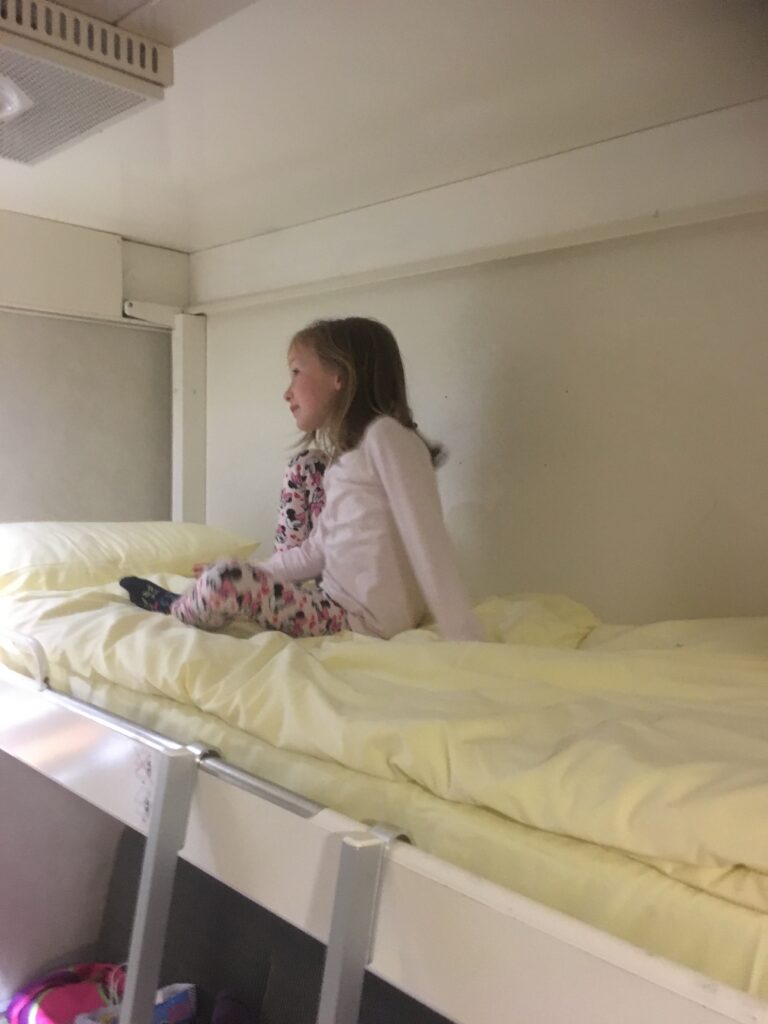
Unlike hotels, ferries usually require a booked bed for every passenger. This sometimes means families need:
- bunk beds
- rollaways
- or separate cabins
This can feel inconvenient — but there is a silver lining.
🛠️ Solution: It can work in your favour
Extra space = extra calm
Two cabins can:
- create quiet zones
- customise sleeping pairs
- reduce conflict
- give everyone personal space
Especially helpful for ND families where:
- routines differ
- bedtime needs are unique
- downtime really matters
It’s okay to choose function over tradition.
❤️ So… are overnight ferries still worth it?
Yes. Completely.
Overnight ferries are:
✨ calmer than airports
✨ more predictable than flying
✨ flexible for routine-based families
✨ car-friendly (no baggage stress!)
✨ genuinely exciting for kids
But — like many family travel experiences — they work best when you understand the hidden challenges and prepare gently for them.
With:
- familiar smells
- layered clothing
- calming sound
- pre-downloaded shows
- backup snacks
- realistic expectations about sleep
…overnight ferries stop being stressful unknowns and start becoming cosy little adventure bases.
For sensory-sensitive or neurodiverse families, that feeling of being in your own private space — with your own things — can be incredibly grounding.
And every crossing helps you learn what works best for your family.
🌊 Final thought from one travelling family to another
We genuinely love overnight ferries. They’ve helped us see the world at a pace that works for our family — and with the right preparation, they can do the same for you.
So don’t be put off by the bits nobody talks about — just go in prepared, compassionate with yourself, and ready to tweak as you go.
Because travel doesn’t need to be perfect.
It just needs to be kinder.
Frequently Asked Questions About Overnight Ferry Cabins
Here are quick answers to questions we hear most from families considering overnight ferries.
Are overnight ferry cabins noisy?
Overnight ferry cabins are usually comfortable — but they’re not completely silent. You may hear footsteps in the corridors, doors closing, announcements, engine sounds and the sea itself. For some children this is no problem at all, but for sensory-sensitive kids it can feel overwhelming. Ear plugs, noise-cancelling headphones or familiar bedtime music and stories can really help create a calm “sound bubble” for sleep.
Do kids actually sleep well on overnight ferries?
Many kids do sleep well on overnight ferries — but it often takes longer than parents expect. The cabin is new and exciting, and some crossings involve early wake-up calls for disembarkation. Planning some wind-down time, keeping bedtime routines familiar and managing expectations can make a big difference.
Are overnight ferries a good option for autistic or sensory-sensitive children?
Yes — overnight ferries can be a great option because you have your own private cabin, space to decompress and the ability to bring familiar comforts from home. However, there can still be challenges such as noise, smells, movement and early mornings. With gentle preparation and the right tools, ferries can feel much calmer than airports and planes for many families.
What should I pack to make an overnight ferry more comfortable for my family?
Think comfort and familiarity first. Pack cuddly toys, fidgets, blankets and downloaded films or shows for wind-down time. Bring layers such as pyjamas, hoodies and cosy socks for changing cabin temperatures. Ear plugs or headphones are useful, and simple breakfast snacks and drinks can be a lifesaver if queues are long in the morning. A familiar scent on a toy or handkerchief can also help children feel grounded.
Will my child feel the ferry moving at night?
Possibly, yes. Your child may notice gentle rocking, vibrations or occasional bumps as the ship travels. This is completely normal. Explaining this ahead of time — and even describing it as being rocked to sleep in a floating hotel — can make it feel less surprising and more reassuring.
Should we book one cabin or two for a family overnight ferry trip?
Most ferries require a booked bed for every passenger, which sometimes means using bunk beds or booking two cabins for larger families. While that can feel inconvenient, extra space can really help neurodiverse families by providing quiet zones, flexible sleeping arrangements and room for downtime — which can make the whole journey calmer.
More from Travelbetter
At Travelbetter our mission is to help you explore more and worry less.
If you are thinking about ferry travel then you might find these articles and tools useful.
- Find your perfect ferry with our Ferry Finder Tool
- Check out the latest Ferry Deals
- How to Reduce Sensory Overload on a Ferry
- More Guides to Ferry Travel